
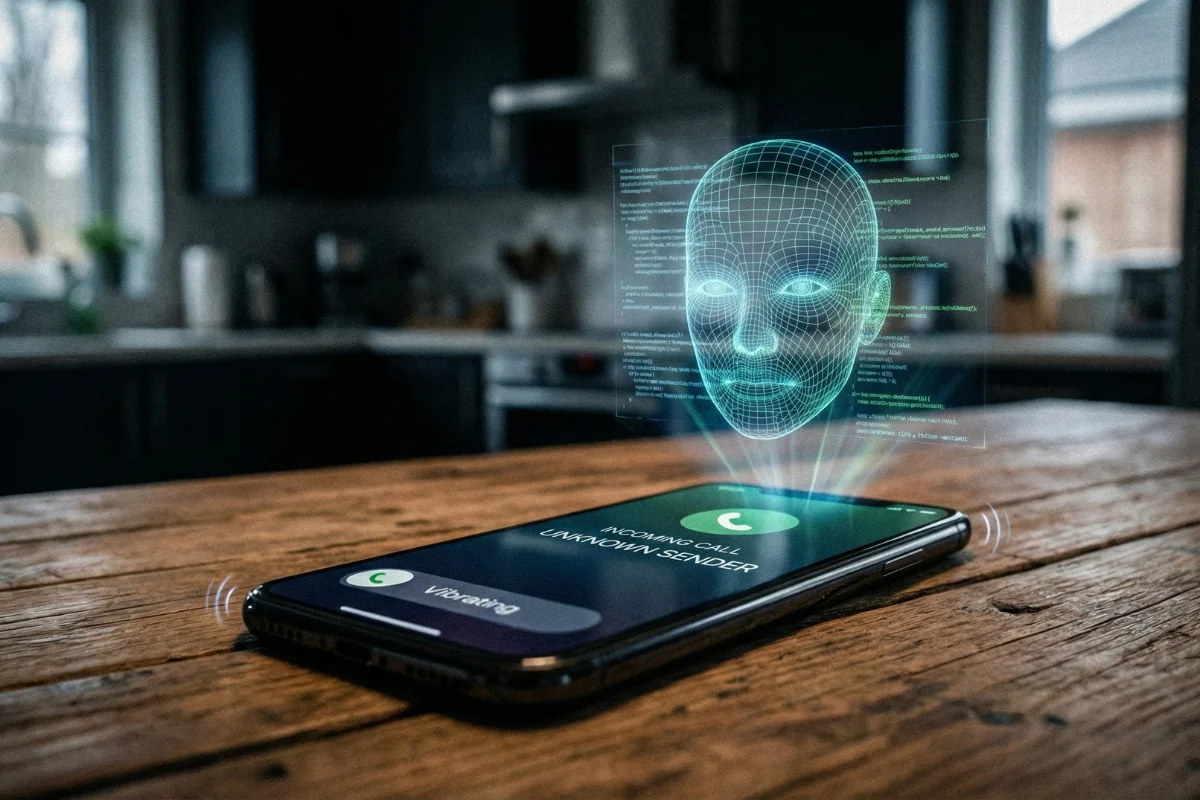
Imagine answering the phone and hearing your child crying for help. The voice sounds completely authentic, but a machine generated it to steal your savings. If you want real AI deepfake scam protection 2026, you must understand how rapidly these synthetic threats operate today.
The Federal Trade Commission [FTC] recently launched an aggressive crackdown on synthetic fraud as scammers scale their attacks. Cybercriminals now need only a three-second audio clip from TikTok or Instagram to clone a human voice perfectly. They weaponize this data to bypass bank security or extort panicked relatives.
You do not need a computer science degree to defend your household. In this guide, you will learn the exact red flags of synthetic cloning, how to secure your family’s digital footprint, and simple protocols to block these highly engineered attacks.
Why AI Deepfake Scam Protection 2026 Is Mandatory
Fraudsters completely revolutionized their tactics over the last year. Experian recently warned that AI-driven fraud will surge massively in 2026, building on billions of dollars in previous consumer losses. The traditional “Nigerian prince” email is dead. Today, scammers use sophisticated artificial intelligence to impersonate government officials, bank tellers, and your closest relatives.
The FTC expanded its Trade Regulation Rule on Impersonation to explicitly cover individual consumers, not just businesses. This legal shift allows the agency to target developers who provide the AI software used for these crimes. However, government regulation moves slowly. Your immediate defense relies entirely on your personal awareness and proactive habits.
If a criminal targets your family, they will spoof the caller ID to match your loved one’s actual phone number. They inject artificial background noise—like sirens or traffic—to create extreme panic. You must learn to separate reality from a synthetic fabrication.
Spotting the Fraud: Real Humans vs. Synthetic Voices
Scammers rely on your emotional reaction to shut down your logical thinking. When you know what to listen for, you can detect the digital anomalies hiding inside a cloned voice. Use this breakdown to identify synthetic audio immediately.
| Feature | 👤 Real Human Caller | 🤖 AI Deepfake Caller |
|---|---|---|
| Breathing Patterns | ✅ Natural pauses and audible breaths | ❌ Continuous speaking without taking a breath |
| Emotional Consistency | ✅ Tone matches the specific situation naturally | ❌ Flat affect or mismatched emotional intensity |
| Response Time | ✅ Instant back-and-forth conversation | ❌ Unnatural delays [1-2 seconds] before replying |
| Audio Quality | ✅ Clear audio based on cell reception | ❌ Metallic clipping or weird robotic echoes |
| Payment Demands | ❌ Standard banking or cash requests | ✅ Demands crypto, gift cards, or wire transfers |
Master AI Deepfake Scam Protection 2026: 4 Actionable Steps
You can immunize your family against these attacks in less than ten minutes. Implement these four strategies today to build an invisible shield around your finances and your peace of mind.
1. Establish a Family Safe Word
This is your ultimate defense mechanism. Create a unique, memorable word or phrase that only your immediate family knows. If someone calls claiming to be your spouse or child in trouble, demand the safe word. A real family member will provide it instantly. An AI clone will dodge the question, get angry, or hang up.
2. Lock Down Your Voice Data
Scammers harvest your raw audio from public social media profiles. Audit your Facebook, Instagram, and TikTok accounts immediately. Switch your privacy settings from “Public” to “Friends Only.” Delete old videos of your children speaking directly to the camera if those accounts remain public. Starve the AI models of the data they need to clone you.
3. Implement the “Hang Up and Call Back” Rule
Never trust caller ID. Spoofing technology makes a scammer’s call look exactly like a trusted contact. If your “bank” calls about a fraudulent charge, or a “loved one” calls begging for bail money, hang up immediately. Dial the verified number saved in your contacts directly. This simple circuit-breaker stops 99% of impersonation attacks instantly.
4. Ask Highly Specific “Challenge Questions”
If you forget the safe word during a panic, ask a question only the real person could answer. Ask about the name of their first pet, what they ate for dinner last night, or a specific detail about a recent family vacation. AI language models cannot access your private offline memories.
The FTC Fights Back: Synthetic Impersonation Rules
The FTC recognizes that AI deepfakes present a catastrophic threat to U.S. households. Their updated rules now make it explicitly illegal to use AI to impersonate an individual to commit fraud. This gives authorities the power to freeze assets and shut down the malicious actors operating these cloning software platforms.
Furthermore, the FTC now holds the platforms and software creators accountable if they know criminals use their tools for deepfake scams. This top-down pressure forces tech companies to implement stricter safeguards, watermarks, and verification layers into their AI generators.
Secure Your Financial Future Today
Technology moves faster than the law. While the FTC battles developers in court, you must act as your own digital bodyguard. Establish your family safe word tonight. Clean up your public social media profiles this weekend.
AI deepfake scam protection 2026 is not about buying expensive cybersecurity software. It is about slowing down, verifying the caller, and refusing to let fear dictate your financial decisions. Protect your data, educate your family, and stay one step ahead of the scammers.
- GPT 5.2 Limits USA: Did OpenAI Just Quietly Cap Your Workflow? [2026 Alert]
![GPT 5.2 Limits USA: Did OpenAI Just Quietly Cap Your Workflow? [2026 Alert]](https://newaidaily.com/wp-content/uploads/2026/02/news-150x150.webp)
- Claude Sonnet 4.6 Pricing: The 2026 Enterprise ROI Guide

- AI Deepfake Scam Protection 2026: Stop Voice Clones

- AI Tools Pricing 2026: Build Your Lean Solo Stack for Under $50/Month

- OpenAI Paywall Panic: The Best Sora Free Alternative

![GPT 5.2 Limits USA: Did OpenAI Just Quietly Cap Your Workflow? [2026 Alert]](https://newaidaily.com/wp-content/uploads/2026/02/news.webp)
![Master Data Fast: Advanced Copilot Excel Prompts [2026 Guide]](https://newaidaily.com/wp-content/uploads/2026/02/Copilot-no-Excel.webp)